Mohamed VI Polytechnic University, Marrakesh-Benguerir, 20-26 February 2023 Programme [ English – Français ] Communiqué [ English – Français – العربية ] Keynote Speakers: Edgar Morin, Stephen Wolfram, Luc Steels, Gregory Chaitin, Stuart Kauffman, Ivar Ekeland, Hervé Zwirn, Geoffrey West UM6P Science Week 2023 – Complexity Summit … Lire plus / Read more
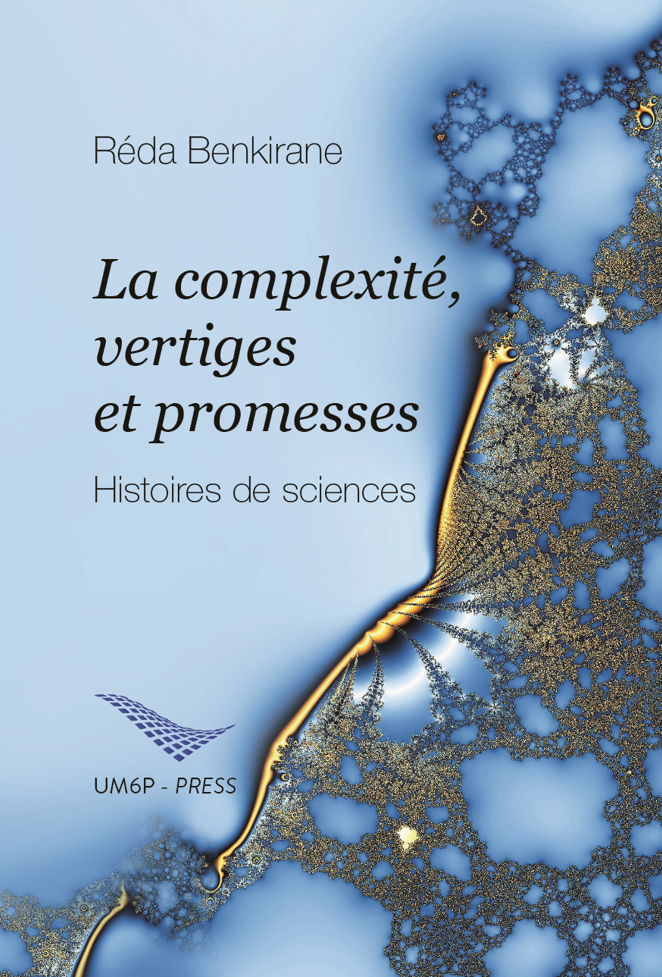
Réda Benkirane, La complexité, vertiges et promesses. Histoires de sciences. Nouvelle édition, Benguerir, UM6P-Press, 2023 – ISBN: 978-9920-41-013-7 A la rencontre des penseurs de la complexité Qu’il y a-t-il de commun entre la complexité d’un réseau informatique et celle des insectes sociaux ? Quelles sont les possibilités et les limites … Lire plus / Read more
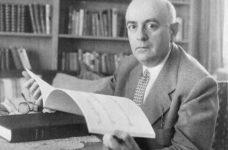
Chez les grands créateurs, la maturité des œuvres tardives ne se compare pas à celle d’un fruit. Elles sont rarement rondes et lisses, mais pleines de rides, voire déchirées ; leur goût n’est pas sucré, et avec leurs épines, leur amertume, elles se refusent à être simplement goûtées ; il leur manque … Lire plus / Read more
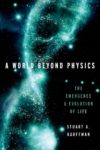
Stuart A. Kauffman, A World Beyond Physics: The Emergence and Evolution of Life, Oxford University Press, 2019 – 320 pages. How did life start? Is the evolution of life describable by any physics-like laws? Stuart Kauffman’s latest book offers an explanation-beyond what the laws of physics can explain-of the progression … Lire plus / Read more
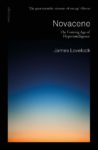
James Lovelock, Novacene: The Coming Age of Hyperintelligence, Penguin UK, 2019 – 160 pages James Lovelock, creator of the Gaia hypothesis and the greatest environmental thinker of our time, has produced an astounding new theory about future of life on Earth. He argues that the anthropocene – the age in … Lire plus / Read more
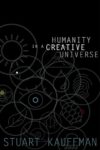
Stuart A. Kauffman, Humanity in a Creative Universe, Oxford University Press, 2016 – 456 pages In the hard sciences, which can often feel out of grasp for many lay readers, there are « great thinkers » who go far beyond the equations, formulas, and research. Minds such as Stephen Hawking philosophize about … Lire plus / Read more
2016 is the tercentenary of the death of the remarkable philosopher/mathematician Leibniz. In this talk we shall present an appreciation of his work on information, computation and complexity leading up to modern work on algorithmic information and conceptual complexity, with applications in epistemological critiques of physics, mathematics and biology. Gregory … Lire plus / Read more

« La musique est une révélation plus haute que toute sagesse et toute philosophie. » L. van Beethoven Le compositeur allemand Ludwig van Beethoven est né le 17 décembre 1770. A l’occasion du bicentenaire de la naissance de Beethoven, en 1970, Jean Massin, musicologue et historien français, consacrait avec son épouse Brigitte … Lire plus / Read more
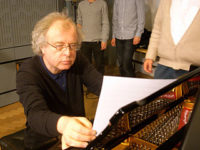
András Schiff last performed the complete Beethoven piano sonatas at Wigmore Hall from 2004–6. On the day before each of the eight recitals in the series, the world-renowned pianist, pedagogue and lecturer gave a lecture-recital in which he explored the works to be performed. The lecture-recital on the Piano Sonata … Lire plus / Read more
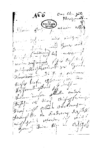
Lettres à l’immortelle bien aimée / Brief an die unsterbliche Geliebte Le 6 juillet 1812 au matin. Mon ange, mon tout, mon moi — quelques mots seulement aujourd’hui, et au crayon (le tien) — Ce n’est pas avant demain que mon logement sera définitivement arrêté — Quelle misérable perte de … Lire plus / Read more